AI, Rates and Credit: Three Cross-Asset Divergences
Market Insights Newsletter
Prepared by the ACG Team
Introduction
AI is increasingly disrupting traditional relationships between commodities, rates and credit, while also reshaping the way investors think about portfolio concentration risk.
Three divergences are particularly important at present:
- The copper/gold ratio versus US interest rates
- AI-related credit spreads versus the broader investment-grade market
- Hyperscaler capex versus free cash flow
Together, they show how AI is evolving from an equity-growth story into a capital-intensive financing cycle.
The Copper/Gold Ratio Is Decoupling from US Rates
The copper/gold ratio has historically moved broadly alongside US Treasury yields. Copper tends to perform well when growth and industrial demand are strong, while gold benefits from defensive demand and lower real rates. A rising copper/gold ratio has therefore generally been associated with higher yields, and vice versa.
That relationship is now weakening.
Gold is being supported by fiscal concerns, monetary uncertainty and questions around the sustainability of the AI investment boom. Copper, meanwhile, remains closely linked to physical economic activity and the infrastructure required for AI, including data centres, electricity grids and power generation. US rates are being driven by a different set of forces, including inflation, fiscal deficits, Treasury supply and term premium.
The divergence suggests that commodities and rates are no longer sending the same macro signal. Either the recent strength in gold proves temporary, or interest-rate markets may eventually need to price a softer growth and inflation outlook.
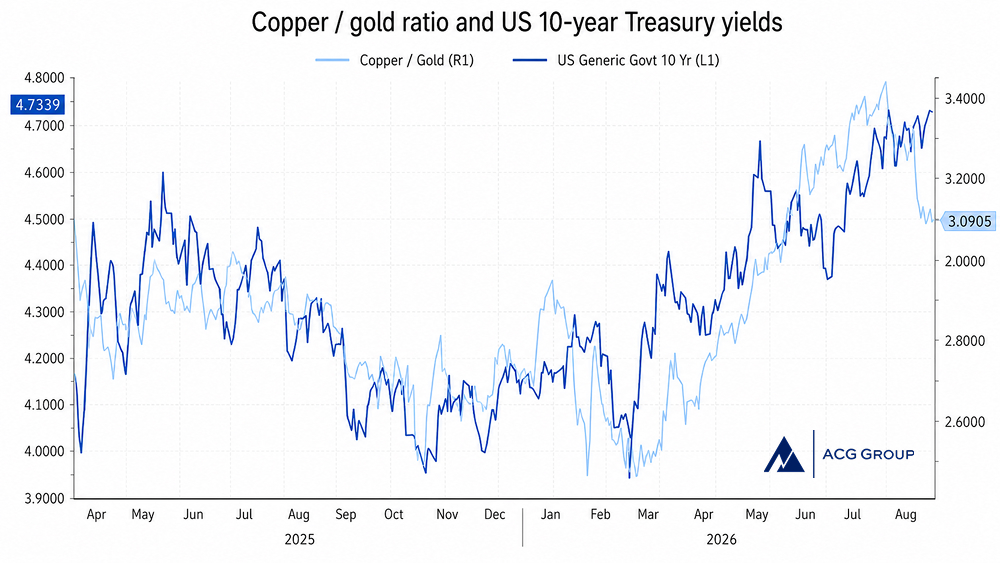
Chart 1. Copper / gold ratio and US 10-year Treasury yields
Source: Bloomberg, ACG Team analysis.
AI Credit Supply and Wider Spreads
AI is also becoming a major credit-financing event. Data centres, GPUs, networking infrastructure and electricity capacity require substantial upfront investment, pushing even highly profitable technology companies towards greater debt issuance.
Technology-related investment-grade spreads have widened relative to the broader market, highlighting an important credit principle: an excellent company is not necessarily an excellent bond at every price. When investors expect repeated issuance and attractive new-issue concessions, existing bonds often need to cheapen to remain competitive.
For active bond investors, this can create opportunities. If spreads widen primarily because of supply rather than a deterioration in credit quality, strong issuers can become available at more attractive valuations.
The broader financing picture is also more complex than headline leverage suggests. AI investment extends beyond traditional bonds into data-centre leases, private credit, infrastructure vehicles and long-term power commitments. Economic leverage may therefore be greater than conventional balance-sheet measures imply.
This matters for portfolio construction. Passive credit investors can accumulate concentration risk as large technology companies increase their index weights through greater issuance. Active managers can instead differentiate between issuers, maturities and capital structures.
AI-related credit supply may therefore be a headwind for broad credit beta, but an opportunity for selective bond picking.
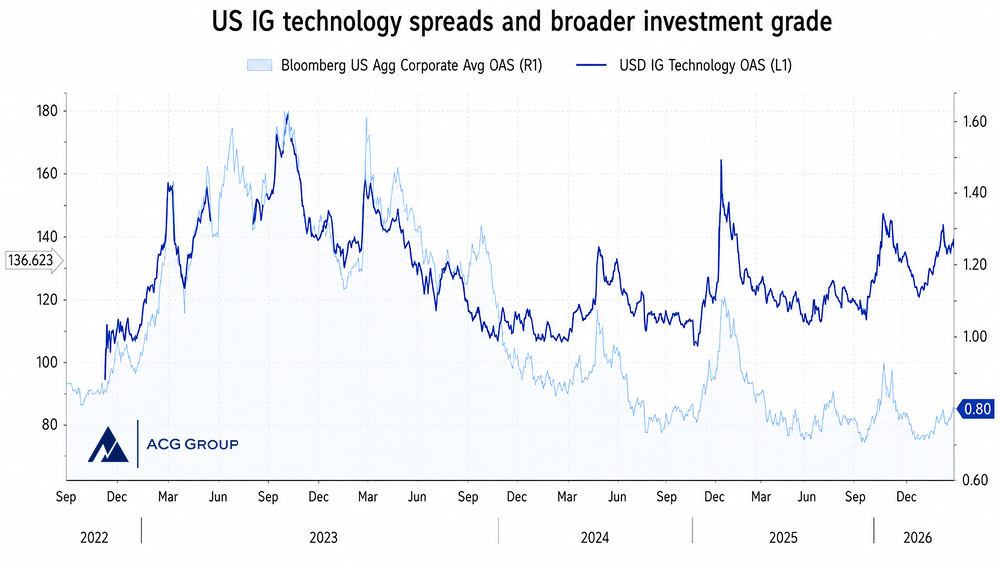
Chart 2. US IG technology spreads and broader investment grade
Source: Bloomberg, ACG Team analysis
Hyperscaler Capex Is Outpacing Free Cash Flow
The expansion in credit is closely linked to another divergence: hyperscaler capex is rising – and is expected to continue rising – far faster than free cash flow.
AI requires companies to invest heavily today in GPUs, data centres, networking and electricity capacity, while the associated revenues are realised over many years. This marks a significant shift from the historically asset-light technology model and makes parts of the sector increasingly capital intensive.
There is also an accounting lag. Capex reduces free cash flow immediately, while the cost reaches earnings gradually through depreciation. Earnings can therefore remain strong even as cash conversion weakens. Over time, today’s investment could become tomorrow’s depreciation burden, putting pressure on margins.
The positive scenario is that AI demand grows fast enough to absorb this capacity. Revenues rise, utilisation remains high and free cash flow eventually catches up. This would also support companies exposed to the physical build-out, including copper producers, utilities and infrastructure providers.
The negative scenario is that capacity expands faster than profitable demand. Competition could reduce AI pricing, while rapid technological change may shorten the useful life of existing equipment. Hyperscalers could then find themselves spending heavily simply to defend market share rather than generate attractive incremental returns.
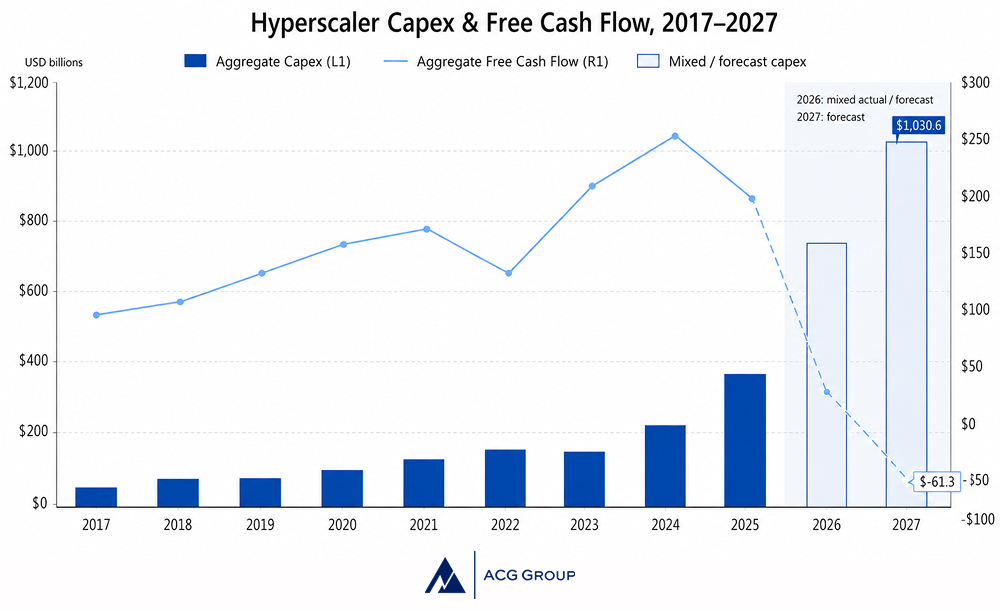
Chart 3. Hyperscaler Capex & Free Cash Flow, 2017-2027
Source: company filings, MarketScreener consensus estimates, Reuters/LSEG, ACG Team analysis
Conclusion: Cross-Asset Portfolio Implications
These three divergences ultimately describe the same transition: AI is moving from an expectations cycle into a financing cycle.
Commodities and infrastructure assets price the physical build-out. Corporate bonds price the financing burden. Equities price future profitability.
This creates both risk and opportunity. An investor holding technology equities, semiconductor stocks, hyperscaler bonds and data-centre credit may appear diversified, but remains exposed to the same underlying assumption: that AI investment continues and generates sufficiently high returns.
A well-structured cross-asset portfolio can reduce this concentration while identifying indirect hedges and opportunities with asymmetric pay-offs.
Disclaimer
This newsletter is provided for informational and marketing purposes only and does not constitute investment advice, investment research, or an offer or solicitation to engage in any investment activity.
Past performance is not indicative of future results.
See full legal disclaimer.
For a more detailed discussion on how investors may position portfolios in light of the dynamics described above, please feel free to contact the ACG Team at: acg.group@acg.group
Prepared by
ACG Team